
Artful Alchemy: Physically Challenged Fiber Artists Creating Edited by Anne Copeland, with assistance from Barbara William for overall content decisions, this book relates the alchemy involved in the artful transformations of 23 severely physically challenged fiber artists, many whom are internationally known. The book is the culmination of a very small but very successful 501 (c)(3) nonprofit that was founded in 2005 by Anne Copeland to provide assistance for physically challenged fiber artists with getting adequate and affordable exposure for their work and to help them with physical development. The organization provided exhibits and shows through assistance from various venues in the United States, some of which held traveling venues. The first year, we curated an exhibit called "My World in Black and White." That exhibit attracted some 121 participants from all over the world, and we had 10 live venues for it, all of which were well attended. We oper...
Popular posts from this blog
Articles
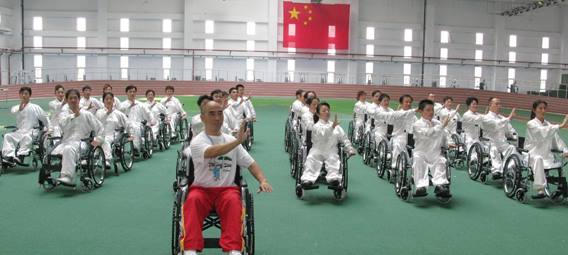
Helping You to Heal Your Disabilities Practitioners and patients in China practicing the new positive Tai Ji movements for people with severe physical and emotional challenges. It is no secret that the body requires movement to assist with circulation for the muscles and organs. Many people who are in wheelchairs or otherwise physically challenged believe that their disabilities cannot improve, and that they will be suffering for the remainder of their lives. Dr. Zibin Guo, a trained medical anthropologist with many years of training and teaching experience with Tai Ji (or Tai Chi), a form of Chinese traditional healing arts had believed that a modified form of Tai Ji practice that could be effectively utilized by people with various physical and mental challenges. He had worked with many people in wheelchairs and knew the importance of movement to provide nourishment and healing for the body. In 2005, Dr. Guo made a proposal of promoting wheelchair Tai Ji d...
Home
- April 03, 2018 We've Come a Long Way, or Have We? In July of 1990, the America n Disability Act was passed, as the culmination of many years, many people fighting to gain rights just as others before them had fought for civil rights of Negroes. It was another bitter fight, and perhaps few if any lives were lost, but the causes were universal; people wanting to be treated as equals in their access to schooling, to jobs, to entry into public places they often could not go because their wheelchairs were not accommodated by those places, or there were no places if they did manage to get in where they could sit comfortably without being stared at, or having people say things that they could hear about their challenges. And there were barriers of curbs and bumps that these people had to try to maneuver around without falling or otherwise being injured. Today, the situation has reverted in large part to the way it was BEFORE the American Disability Act. Children w...
Comments
Post a Comment
Please include your e-mail with your comments and a website address if you have one. Be respectful with your comments. We understand that there are many issues for physically, developmentally, and emotionally challenged people that are still not addressed universally, and we do want to hear about those. Inspiration always welcome. Thank you.